
Allantoin for Skin: Benefits, Uses and What It Actually Does?
There's a decent chance you've been using Allantoin for years without ever noticing it. It's not the kind of ingredient that gets its own serum or its own hashtag. It just quietly sits in the ingredient list of your sunscreen, your moisturizer, maybe your lip balm — doing its job while niacinamide and vitamin C get all the credit.
So what is Allantoin, actually, and is it worth paying attention to? Short answer: yes, especially if your skin tends to get irritated, tight, or reactive. In this guide, we'll cover what Allantoin is, the main Allantoin skin benefits, the most common Allantoin uses for skin, and how to actually work it into a routine.
What is Allantoin?
Allantoin is a compound originally derived from the comfrey plant, and in skincare it's used to calm and soothe irritated skin. Dermatologists call it a 'skin protectant' which sounds a bit clinical but it basically means it calms redness, locks in moisture, and keeps your skin barrier happy and healthy
Most of the Allantoin used in products these days is made synthetically rather than pulled from plants — not because the natural version doesn't work, but because a lab-made version is more consistent and easier to formulate with. Either way, on a label it just shows up as "Allantoin," often sitting next to other soothing ingredients like panthenol or α-Bisabolol.
If you want a one-line comparison: niacinamide brightens, hyaluronic acid hydrates, Allantoin calms. It's the ingredient doing damage control so the rest of your routine can do its job without your skin protesting.
Allantoin Skin Benefits
A few things stand out when you look at the Allantoin skin benefits people actually notice.
calming redness and irritation is really its main claim to fame, and that’s why you'll find it in nearly every after-sun product on the shelf. Skin that's flushed from sun exposure, a new active ingredient, or over-exfoliating tends to respond well to Allantoin.
Allantoin helps skin hold onto moisture. It supports the skin barrier, which is the layer responsible for keeping water in and irritants out. When that barrier is working properly, skin feels less tight and less dry day to day, without needing to layer on more product.
Allantoin also smooths texture, gently. There's a mild keratolytic effect here, meaning it helps skin shed dead cells a bit more easily, without the sting or peeling that you'd get from a stronger exfoliating acid.
Beyond that, Allantoin supports the skin's own healing process. This is part of why you'll see it in products meant for minor skin recovery, whether that's post-sun, post-treatment, or just skin that's had a rough week.
And honestly, one of the best Allantoin skin benefits is that it simply doesn't cause problems. It's non-comedogenic, rarely irritating, and plays nicely with almost every skin type — oily, dry, combination, sensitive, doesn't really matter.
Allantoin Uses for Skin
When it comes to Allantoin uses for skin, you'll mostly run into it in these categories:
-
Sunscreens and after-sun care, to offset the redness that comes with UV exposure
-
Day creams and moisturizers, where it keeps hydration comfortable instead of heavy
-
Sensitive-skin formulas — cleansers, toners, creams built for reactive skin
-
Post-exfoliation or post-treatment products, since it supports recovery
-
Lip balms and hand creams, for the same barrier-supporting reason
A useful shortcut, if you're ever scanning a label in a hurry: if a product markets itself as "calming" or "soothing," there's a good chance Allantoin is in there somewhere.
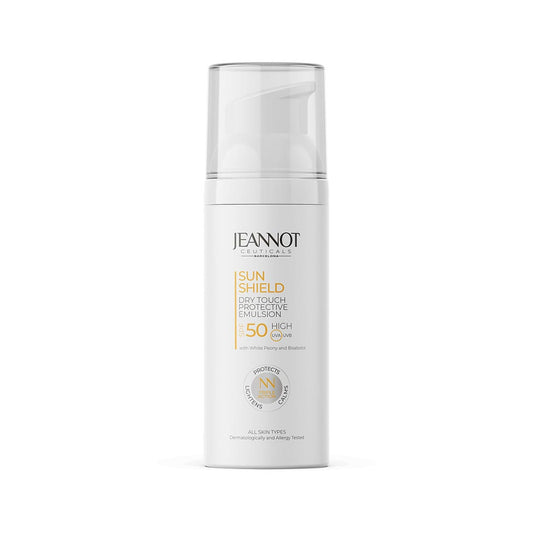
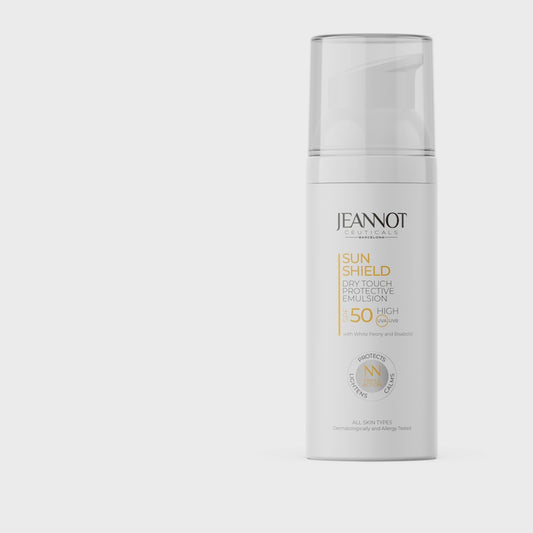
Take our Dry Touch Protective Emulsion SPF50 as an example. It pairs Allantoin with White Peony extract and α-Bisabolol, so the sunscreen doesn't leave skin feeling stripped or reactive after a few reapplications, which is a fairly common complaint with high-SPF formulas.
How to Actually Use Allantoin?
There's not much of a learning curve to using Allantoin, and that's part of the appeal.
You can use Allantoin morning and night without much risk of overdoing it. Unlike retinoids, there's no need to build up tolerance slowly, and it layers fine under or over most other products, including SPF and serums.
It tends to work best as a supporting player rather than the main event. Pair it with a hydrating ingredient like hyaluronic acid, or a brightening one like niacinamide, and Allantoin helps take the edge off any dryness those ingredients can sometimes cause. If you're curious how niacinamide fits into all of this, we've written more about it in what does niacinamide do for your skin.
Who Should Be Using Allantoin?
Realistically, most people can. But it's especially worth prioritizing if:
Your skin is sensitive or gets reactive easily — if it flushes at the first sign of a new product, this is the ingredient working in your favor, not against you.
You spend a lot of time outdoors, since a sunscreen with Allantoin tends to feel more comfortable over repeated applications than one without it.
You're recovering from sun exposure, exfoliation, or general skin irritation.
You're already using a few active ingredients and want something to soften the edges without diluting what those actives are actually doing.
There isn't really a skin type that needs to steer clear of it, which is part of why it's used so widely.
Is Allantoin Safe? Any Downsides?
Genuinely, not many. Allantoin is one of the more universally well-tolerated ingredients in skincare, and true allergic reactions to Allantoin are uncommon. That said, patch-testing any new Allantoin-based product is just good practice, especially if your skin has a history of being fussy about new things.
Bottom Line on Allantoin for Skin
Allantoin was never going to be the ingredient that trends — it doesn't have a dramatic before-and-after story to tell. But if you've ever used a sunscreen or moisturizer that just felt comfortable instead of tight or irritating, there's a good chance Allantoin is part of why.
Our Sun Shield range leans on Allantoin for exactly that reason: protection that doesn't come at the cost of comfort. And if you're shopping for a daily moisturizer with the same calming approach, our Day Cream collection has options built around soothing ingredients like Allantoin for skin that needs a gentler touch.
Questions People Actually Ask
1. Is Allantoin the same as hyaluronic acid?
No, though they get confused since both show up in hydrating products. Hyaluronic acid pulls moisture into the skin; Allantoin calms irritation and supports the barrier that keeps that moisture where it belongs.
2. Can it help with acne?
Indirectly. It won't clear breakouts the way salicylic acid or benzoyl peroxide would, but it can calm the redness and irritation that often tags along with acne-prone skin.
3. Will it brighten my skin?
Not really on its own. It's usually paired with something like niacinamide or White Peony extract for the brightening part, while it handles the calming side.
4. Is it fine for daily use?
Yes, and there's no real reason to cycle it in and out the way you might with stronger actives.
Tags:
Previous
Hamamelis Virginiana: Uses, Benefits & How It Helps Your Skin?
Next
Monsoon Skin Problems: Causes, Fixes and the Routine That Actually Works
Related articles
How to Get Rid of Clogged Pores on Face?
Oct 06 2026
How to Reduce Redness on Face?
Sep 23 2026
How to Reduce Excess Sebum Production on Face?
Sep 21 2026