
How to Improve Skin Elasticity? Causes & Effective Fixes
Improving skin elasticity comes down to two things working together: protecting the collagen and elastin you already have, and giving your skin what it needs to produce more. In practice, that means using sunscreen every day, choosing a serum with collagen-supporting ingredients, and avoiding habits that break down these fibers faster than your skin can rebuild them. Give it 8–12 weeks before judging the results. Collagen remodeling takes time, and anyone promising visible results in a week isn’t being realistic.
Most people don’t notice changes in their skin elasticity until one day, they suddenly do. You pinch the skin on the back of your hand and notice that it takes a little longer to bounce back. Or you catch your jawline in a photo and it looks slightly different from what you see in the mirror at home.
Honestly, it can be confusing because so much advice online treats skin elasticity as if it’s the same thing as wrinkles. But they’re not the same. Skin elasticity is its own thing, with its own causes and its own role in how your skin changes with age.
So here's what skin elasticity actually is, why it fades the way it does, and a routine for improving it that isn't just "moisturize more and hope."
Quick context before we get into it. Skin elasticity is about bounce-back — how quickly your skin returns to its original shape after being stretched. That’s different from firmness, which is more about the skin’s ability to resist sagging in the first place.
Collagen production starts gradually slowing down in your mid-20s and declines further after 30. It’s not something you’ve done wrong; it’s simply part of biology. And when elasticity starts declining earlier than expected, sun exposure can play a bigger role than age alone. That’s the part that surprises most people.
What Is Skin Elasticity, Exactly?
Pinch the skin on the back of your hand and let go. How quickly it snaps back into place is a rough, non-scientific way to get an idea of your skin’s elasticity, but it explains the concept well.
Two proteins do most of the work beneath the surface. Collagen provides structure and support, while elastin gives skin its ability to stretch and bounce back, which is where it gets its name. Hyaluronic acid plays more of a supporting role by keeping the skin hydrated enough for collagen and elastin to function properly.
When all three are in healthy supply, skin looks more taut and bounces back quickly. As they decline, that recovery becomes slower, and over time, the skin can start to look loose or slightly crepey rather than smooth.
If loose or sagging skin is more of a concern for you than fine lines, our Loose Skin collection is designed specifically to address that concern.
What Causes Loss of Skin Elasticity?
Age plays a role, sure. But a good part of what people think of as loss of skin elasticity can also come from a handful of habits quietly affecting the skin for years, often without being noticeable until the effects start to show.
Sun exposure is probably the biggest one. Unprotected UV exposure breaks down the collagen you already have and interferes with your skin’s ability to produce new collagen. So, if maintaining skin elasticity is the goal, sunscreen isn’t optional.
Smoking can cause similar damage by restricting blood flow to the skin and directly affecting collagen and elastin fibers. Rapid weight loss, or repeatedly losing and regaining weight, can stretch the skin faster than it can adapt. That’s one reason elasticity concerns often become more noticeable after major changes in weight.
Dehydration doesn’t directly cause loss of elasticity, but it can make existing elasticity loss look more noticeable. Well-hydrated, plump skin naturally looks firmer than dry skin, regardless of what’s happening with collagen underneath.
Poor sleep and chronic stress can also affect the skin, partly because they may raise cortisol levels, which can interfere with the repair processes that happen overnight. And when your diet is low in protein and Vitamin C, collagen production can slow down further because your body needs these nutrients to make collagen. It’s not optional, it’s chemistry.
None of these factors have to happen all at once. Usually, it’s two or three of them quietly affecting the skin in the background for years, and then one day, you see the combined effect in the mirror.
How to Improve Skin Elasticity?
If you’ve searched this before and ended up with ten different answers that barely agree with each other, here’s the info that actually holds up.
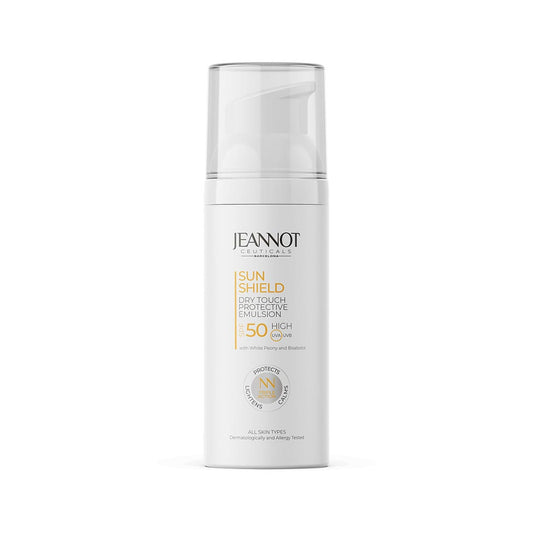
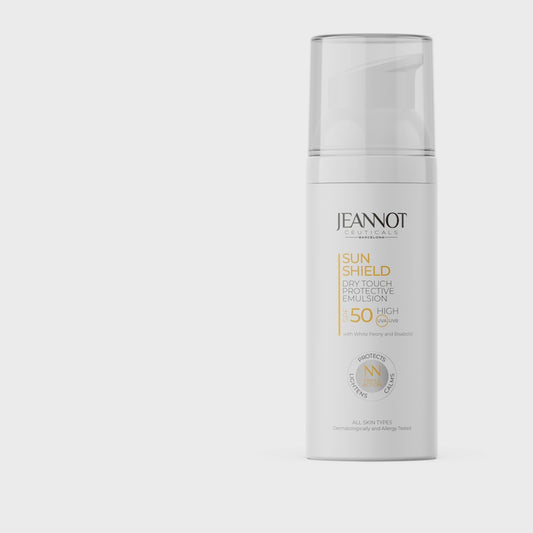
Sunscreen comes first, and honestly, it’s the least exciting step by far. But UV damage can break down more collagen than any serum can realistically rebuild, so skipping SPF can undo a big part of the work you’re doing elsewhere. People often avoid sunscreen because it feels heavy or leaves a white cast. If that sounds familiar, our Sun Protection range offers lighter textures that are easier to wear every day, rather than just own.
After that, a serum or ampoule built around collagen-supporting ingredients such as peptides, Vitamin C and plant stem cells can be a useful addition to your routine. These ingredients support your skin’s natural collagen-building processes rather than simply sitting on the surface. The Collagen Serum is formulated with this focus, and customers often mention their skin feeling firmer after consistent use over a few weeks. For a more concentrated step, you can layer the Intense Firming Ampoule underneath.
Hydration matters here more than most people realise, and it isn’t the same as moisture. Hydration refers to the water content in your skin, while moisture helps keep that water from escaping. Hyaluronic acid attracts water to the skin and helps it look plumper, which can support a smoother, more comfortable feel. If your skin tends to feel tight by the afternoon, our Hyaluronic Acid range may be worth exploring.
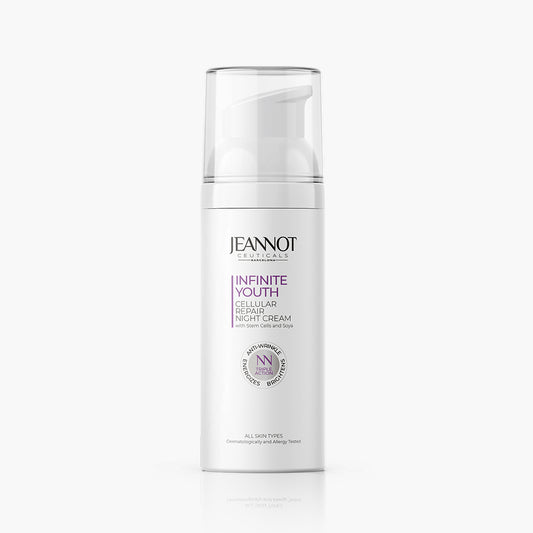
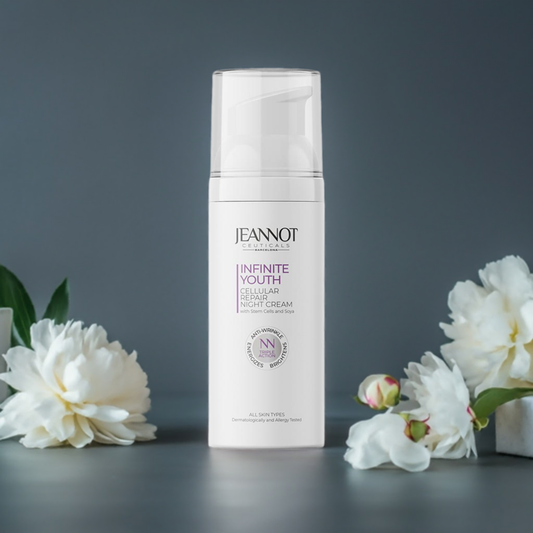
Don’t skip night care either. Your skin carries out important repair and renewal processes while you sleep, which is why a night cream with well-chosen active ingredients can be more than just a basic protective layer. The Night Repair Cream is formulated with overnight skin support in mind.
And most importantly, go easy on your skin. Improving elasticity is about consistency, not intensity. Throwing too many strong actives into your routine at once or over-exfoliating because you want faster results can irritate the skin barrier and end up working against the healthy skin you’re trying to maintain.
How to Increase Skin Elasticity Naturally, Beyond the Products?
Skincare handles a lot of this, but what happens outside your routine matters roughly as much, if not more, over the long run.
Protein matters because collagen is a protein, and your body needs amino acids from food to keep producing it. Vitamin C matters for the same reason — it's a required cofactor for collagen synthesis, not just something added to serums for marketing. Citrus, amla, and bell peppers all help here, on top of a topical Vitamin C product. Staying hydrated, actually drinking water rather than just applying it topically, matters for the same reason skin cells need water to function properly like every other cell in your body.
Sleep is underrated in most skincare conversations, but collagen repair is tightly linked to your sleep cycle, so cutting sleep short cuts repair time short too. Regular movement helps circulation, which gets nutrients to skin cells more efficiently than they'd otherwise arrive. And if smoking applies to you, cutting back or quitting is genuinely one of the fastest ways to slow elasticity loss — faster than most products can compensate for.
None of this replaces an actual skincare routine. But skincare on its own can't fully make up for a diet or lifestyle that's working against it at the same time.
Common Mistakes That Slow Down Progress
The list is short, but it’s worth reading properly. Expecting visible results within a week is probably the most common mistake. Collagen remodeling takes months, not days. Judging your routine too early can make you give up just before you might start seeing a difference.
Skipping sunscreen on cloudy days, or assuming you don’t need it because you’re mostly indoors, is another common mistake. UV rays can still reach your skin through clouds and windows, and most people underestimate that exposure.
Jumping straight into high-strength actives without giving your skin time to build tolerance can damage the skin barrier rather than support it. That can set your elasticity-focused routine back instead of moving it forward.
And a lot of people focus entirely on their face while ignoring the neck and hands. These are often among the first areas where loss of elasticity becomes noticeable, even though we tend to pay attention to them much later.
If fine lines are appearing alongside looser-looking skin, the two concerns are often connected rather than completely separate. It may be worth exploring our Fine Lines & Wrinkles collection alongside your elasticity-focused routine.
The Bottom Line
Loss of skin elasticity doesn't happen overnight, so it's not going to reverse overnight either. But it responds well to consistency: daily SPF without exceptions, ingredients that genuinely support collagen and elastin rather than just claiming to, enough hydration, and a handful of lifestyle habits that stop working against the effort. Once you actually understand what's causing the loss of skin elasticity for your skin specifically, the rest of it stops feeling like guesswork and starts feeling like a routine you can just stick to.
For anyone chasing firmer, more responsive skin as the main goal, our Infinite Youth range is built specifically around collagen support and the general slow-down that comes with time.
Frequently Asked Questions
1. What is skin elasticity?
It's your skin's ability to stretch and return to its original shape, driven mostly by collagen and elastin levels in the deeper layers of skin.
2. How can I improve skin elasticity naturally?
Eat enough protein and Vitamin C, drink enough water, sleep properly, move regularly, and cut back on smoking if it applies to you — all of it supports your body's own collagen and elastin production rather than working against it.
3. What causes loss of skin elasticity?
Mainly sun exposure, natural aging, smoking, rapid weight change, chronic dehydration, poor sleep, high stress, and a diet that's short on protein or antioxidants.
4. How do I increase skin elasticity through skincare specifically?
Daily SPF, a collagen-support serum with peptides or Vitamin C, a hydrating hyaluronic acid product, and a night cream built for repair — used consistently for at least 8 to 12 weeks before expecting to see much change.
5. Can lost skin elasticity actually be reversed?
Some of it, yes, especially the part caused by dehydration, sun neglect, or an inconsistent routine. What's lost purely to age can be slowed and improved but not fully undone.
6. At what age does skin elasticity usually start declining?
Collagen production tends to slow starting in the mid-20s, with more visible changes to elasticity showing up from the early-to-mid 30s onward for most people.
Tags:
Previous
How to Repair Over Exfoliated Skin Without Making It Worse?
Next
Does Niacinamide Lighten Skin? Here’s What Vitamin B3 Really Does
Related articles

How to Get Rid of Clogged Pores on Face?
Oct 06 2026

How to Reduce Redness on Face?
Sep 23 2026

How to Reduce Excess Sebum Production on Face?
Sep 21 2026