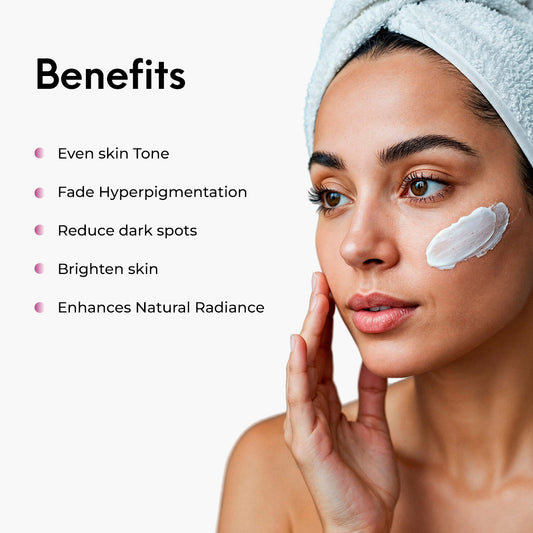

Does Niacinamide Lighten Skin? Here’s What Vitamin B3 Really Does
Type “does niacinamide lighten skin” into Google, and you’ll find two completely different stories. One side swears it’s almost a miracle brightener. The other says it’s overhyped and barely does anything. The truth is somewhere in between.
Niacinamide does not bleach or lighten your natural skin tone. What it actually does is help fade dark spots, calm uneven patches, and gradually improve the overall appearance of your skin tone.
That’s what niacinamide skin lightening really means. It’s not about changing your natural skin colour. It’s about reducing the pigmentation, acne marks, and dark patches that can make your skin look uneven, so your natural tone looks clearer and more even.
Now, let’s get into how niacinamide actually does that.
What Niacinamide Actually Is?
Niacinamide is Vitamin B3 in a form your skin can actually use. Your skin cells already rely on B3 for basic energy and everyday functions, so when you apply it as a serum, it can do several things at once.
It helps support the skin barrier, calm redness, balance excess oil, and most importantly, slow down the transfer of pigment within the skin.
That last part is exactly why “vitamin B3 for skin whitening” is such a common search. Most people searching it are really trying to understand whether niacinamide can make their skin look lighter, brighter, or more even.
Fair enough. So, let’s clear that up.
Niacinamide Skin Lightening vs. Skin Whitening: Not the Same Thing
Honestly, this confusion is mostly a language problem, not a science problem.
“Skin whitening” usually means changing your natural, base skin tone to make it lighter overall. That’s the territory of stronger ingredients like high-strength hydroquinone, or in the worst cases, mercury-based creams, which are banned because of their serious health risks.
Niacinamide is not in that category at all. It doesn’t change your natural skin colour. So when a brand implies that it does, that’s marketing talking, not the ingredient itself.
Niacinamide skin lightening is a more specific concept. It focuses on fading dark spots, old acne marks, sun damage, melasma, and other areas of pigmentation that can make your skin look uneven.
It won’t make you look like a different person or change your natural skin tone. Instead, you’ll look like yourself, just with less patchiness and a more even-looking complexion.
So, does niacinamide change your natural skin colour? No. Does it help brighten the skin and even out the appearance of pigmentation? Yes. And that’s really what niacinamide skin lightening is all about
The Actual Mechanism
Let’s kept simple. Your skin produces a pigment called melanin inside cells known as melanocytes. That pigment then moves into the surrounding skin cells, where it contributes to your visible skin colour, dark spots, and uneven tone.
Niacinamide helps slow down this transfer of pigment. It doesn’t completely stop melanin production, and that’s a good thing because melanin plays an important role in your skin’s natural protection from the sun. Instead, niacinamide helps reduce how much pigment gets transferred to the upper layers of the skin.
Less pigment reaching the surface means existing dark spots can gradually fade, while new pigmentation may be less likely to develop.
And this isn’t just a nice theory. Studies using around 5% niacinamide over 4 to 8 weeks have shown measurable improvements in hyperpigmentation.
The results are gradual, but they’re real. Niacinamide isn’t an overnight fix, and that’s exactly why consistency matters.
So, Does Niacinamide Lighten Skin?
It depends on what you mean by “lighten.”
If you mean fading dark spots and evening out blotchy or uneven skin tone, then yes. And honestly, that’s what most people asking this question are actually looking for.
But if you mean dramatically changing your natural skin colour and making it lighter overall, then no. Safe skincare ingredients don’t work that way.
So, if a product claims it can dramatically change your natural skin tone, that’s a red flag worth paying attention to.
How to Actually Use It for Brightening Results?
A few simple habits separate people who actually see results from those who give up after two weeks.
Start with the right strength. Most research around niacinamide focuses on 4–5% concentrations. Going higher doesn’t necessarily mean faster results. It can simply increase the chances of irritation.
Consistency matters more than strength. Using niacinamide regularly, even daily, is more useful than occasionally reaching for a high-strength formula. Skincare results come from consistency.
Be patient. Most people start noticing changes around 4 weeks, while more noticeable improvement can take 8–12 weeks. Your skin needs time to respond, no matter how many products you use.
You can easily pair niacinamide with Vitamin C and Hyaluronic Acid. Some people prefer to use them at different times of the day, but there’s no real need to separate them.
And don’t skip sunscreen. This is one of the most commonly missed steps, and ongoing sun exposure can work against your progress. If you’re trying to fade pigmentation, daily sun protection is essential.
If you’d rather start with one targeted product, our Skin Lightening Ampoule combines Vitamin B3 with Punarnava Extract, Vitamin C-Glucoside, and White Peony to target the appearance of dark spots.
Niacinamide Skin Whitening: What Realistic Results Look Like
Here’s a rough, honest breakdown of how results usually progress.
Weeks 1–3: You may not see much change in pigmentation yet, but your skin will often start feeling calmer and smoother.
Weeks 4–8: This is when dark spots may start looking softer around the edges. The difference can sometimes become noticeable in photos before it’s obvious in the mirror.
Weeks 8–12: This is when most people start seeing a more noticeable improvement.
Melasma and other stubborn pigmentation can take longer to respond and may need additional support alongside niacinamide.
Everyone’s skin responds differently, so consistency and patience are key.
How It Compares to Other Brightening Ingredients
Niacinamide's biggest selling point is how gentle it is compared to the alternatives.
|
Ingredient |
Best For |
Irritation Risk |
|
Niacinamide |
Overall tone, barrier health, mild pigmentation |
Low |
|
Vitamin C |
Antioxidant protection, brightening |
Low–Moderate |
|
Alpha Arbutin |
Targeted dark spot fading |
Low |
|
Kojic Acid |
Stubborn pigmentation, melasma |
Moderate |
|
Hydroquinone |
Severe hyperpigmentation (prescription-strength) |
Higher, requires supervision |
Mild pigmentation, niacinamide alone is usually enough. Deeper, more stubborn spots often need help from alpha arbutin or vitamin C alongside it. Curious what else niacinamide brings to the table beyond fading spots? We covered that fully in What Does Niacinamide Do for Your Skin?.
Is It Safe for Everyone?
For most people, yes. Niacinamide is one of the gentler active ingredients, which is why you’ll find it in so many skincare products these days.
Irritation is also relatively uncommon. Some people may experience mild tingling or redness, especially with higher concentrations or when too many active ingredients are layered together.
Have reactive or sensitive skin? Patch test first and start every other day before moving to daily use.
Building a complete routine for dark spots and uneven skin tone? Our Uneven Skin Tone & Blemishes collection is designed specifically for these concerns.
Dealing with rough texture too? Our latest post on Mandelic Acid for Skin is a good next read. It’s a gentle exfoliant that pairs well with niacinamide and can support faster fading of the appearance of acne marks.
The Bottom Line
Niacinamide was never designed to be a whitening shortcut, so expecting overnight skin lightening is where the disappointment usually starts.
What it actually does, fading dark spots, calming redness, evening out skin tone, and supporting your skin barrier, is arguably more useful anyway. The results are gradual, but they’re backed by real research. That combination is rarer in skincare than people give it credit for.
Trying to improve dark spots and uneven skin tone? Give niacinamide skin lightening the time it needs, stay consistent, and don’t skip sunscreen. That’s really the whole formula.
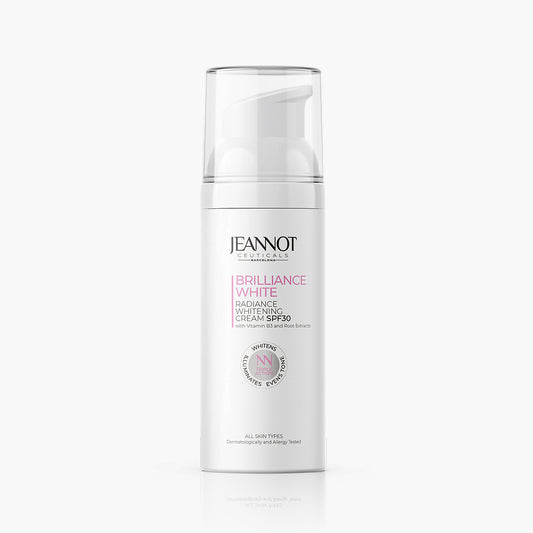
Ready to start? Explore our Skin Lightening Ampoule and browse the full Brilliance White range at Jeannot Ceuticals.
Frequently Asked Questions
1. Does niacinamide lighten skin permanently?
Not permanently, no. It works by slowing pigment build-up, so the effect sticks around only as long as you keep using it. Your skin keeps making melanin on its own, sun exposure especially.
2. Will niacinamide change my skin tone overnight?
Not overnight, and honestly, nothing does. Give it 4 to 8 weeks before expecting to see a real difference.
3. Is niacinamide skin lightening safe for daily use?
It is, at the usual 5% strength. That's considered safe for daily, long-term use, sensitive skin included.
4. Can vitamin B3 be used for skin whitening on all skin tones?
Yes, across the board. It evens out tone regardless of your starting shade, and it skips the risks that come with harsher whitening ingredients.
5. How long until I see niacinamide skin lightening results?
Small changes tend to show up around week four. The clearer niacinamide skin lightening results usually land somewhere between weeks 8 and 12, assuming you're using it twice a day without gaps.
Tags:
Previous
How to Improve Skin Elasticity? Causes & Effective Fixes
Next
How to Remove Darkness Around Mouth? Causes & Remedies
Related articles

How to Get Rid of Clogged Pores on Face?
Oct 06 2026
How to Reduce Redness on Face?
Sep 23 2026

How to Reduce Excess Sebum Production on Face?
Sep 21 2026