

What Is Exfoliation & How to Exfoliate Your Face the Right Way?
Exfoliation means clearing dead skin cells from your face — with a scrub or an acid — so the fresher skin underneath can actually show. Once a month, exfoliation is recommended for most people, and should always be followed with moisturizer & sunscreen.
"Just exfoliate more" — every dermatologist, every friend with good skin, half the internet says it. Sounds obvious, right? But the truth is that most people either skip exfoliation completely, or go too hard with a gritty scrub twice a day, and then wonder why their face looks so red, angry, and chapped.
Through this blog, we’ll let you know what exfoliation is, why it matters, and how to exfoliate face skin without turning your routine into a science experiment. If you exfoliate skin the right way, most of your other skincare problems get easier too.
A few things worth knowing before we get into it:
- Exfoliation basically speeds up something your skin is already doing on its own.
- There are two ways to exfoliate — physical scrubs and chemical peels — and they're not interchangeable, meaning you can't just swap one for the other.
- Over-exfoliating is the more common mistake, not under-exfoliating — more people get this one wrong.
- The right frequency to exfoliate depends entirely on your skin type, not on some general "rule."
What Is Exfoliation?
At its simplest, exfoliation is removing the dead skin cells sitting on the surface of your face so newer skin can come through. Your skin removes dead cells on its own — roughly every 28 to 40 days. But this cycle gradually starts to weaken as you get older, or when your skin's been dealing with sun, pollution, or dehydration. When this cycle weakens, dead cells don't remove themselves; they need to be removed.
They just sit there. And skin that's carrying a layer of dead cells looks exactly how you'd expect: flat, rough, a bit tired. That's dullness, more or less, and if that's the exact complaint you're dealing with, our Dull Skin collection goes deeper into what's causing it.
Exfoliating your skin isn't something extra or an "advanced" step. It's just helping along a process your body already runs — pushing it to happen a little faster and a little more evenly than it would on its own. Once you understand what is exfoliation at this basic level, the rest of your routine starts making a lot more sense.
Why Should You Bother Exfoliating?
Because everything else in your routine works better once dead skin is out of the way. That's really the whole reason behind it. A serum applied over a buildup of dead cells doesn't sink into the skin — it just sits on top, and you've basically wasted the product.
What you actually get when you exfoliate skin regularly:
- Texture that feels smoother, not scratchy or patchy
- Serums and moisturizers that absorb instead of pooling on the surface
- Pores that stay clearer, which for a lot of people means fewer random breakouts
- A tone that gradually looks more even and, yes, brighter
If you're using a brightening serum already and not seeing much change, the serum might not be the problem. Dead skin sitting on top of it could be. Our face serums are made to absorb quickly, but even a good formula needs skin that's ready to receive it.
How to Exfoliate Face Skin Without Overdoing It
Here's where most routines fall apart — not from lack of effort, but from too much of it. Exfoliating isn't about pressure or frequency; it's about technique. If you've searched "how to exfoliate skin" or "how to exfoliate face" and gotten ten different answers, here's the version that actually works.
Start clean. Never exfoliate over makeup, sunscreen, or a face that hasn't been washed first.
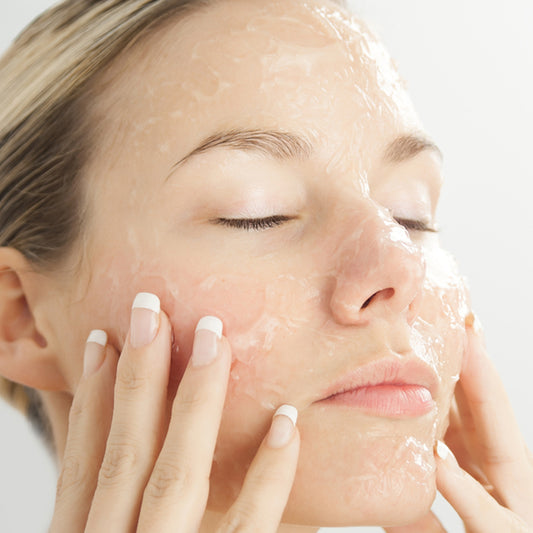
Pick the right type of exfoliant. Physical exfoliants use fine granules to buff away dead skin manually. Chemical exfoliants — acids like glycolic, mandelic, or citric acid — dissolve the bonds holding dead cells in place, no scrubbing required. If your skin leans sensitive or breaks out easily, chemical exfoliants tend to be the gentler option. A product like the Jeannot Ceuticals Exfoliating Peel blends three acids specifically so it works without the harshness of a single strong one, and our broader face exfoliator range covers oily, dry, and combination skin if you're still figuring out what suits you.
Go light with application. Small circular motions if it's a scrub, or a thin, even layer if it's a peel. You're not trying to sand anything down.
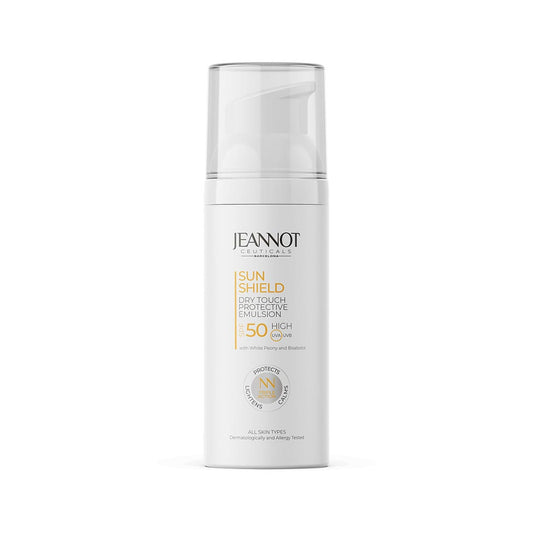
Rinse, then hydrate. Skin can feel a little tight right after exfoliating, which is exactly the moment to layer on something hydrating. And if tightness is a regular thing for your skin rather than a one-off after exfoliating, it's worth figuring out whether that's dehydration rather than dryness — the two aren't treated the same way. Sunscreen, non-negotiable. Freshly exfoliated skin is more reactive to UV than usual. Skip this step and you're undoing a chunk of the benefit. Our SPF range is worth a look if your current sunscreen feels too heavy to wear daily.
How Often Should You Exfoliate Skin?
For all skin types, you should exfoliate once a month if you want to perfectly mimic your skin's natural 28-day cell turnover cycle. This gentle frequency allows your skin barrier to heal fully between sessions and prevents damage.
Most people make the common mistake of exfoliating their skin every day once they see how good their skin looks after the first try. It's tempting, but daily exfoliation doesn't give skin enough time to regenerate between sessions. The result is redness, sensitivity, and — annoyingly — skin that ends up looking duller than before you started.
What Mistakes Should You Avoid?
A short list, but each one matters:
- Scrubs with sharp or uneven granules, which can create tiny tears you won't notice until your skin starts reacting
- Exfoliating over active breakouts or already-irritated patches
- Layering multiple acids in one routine without knowing how they interact with each other
- Skipping moisturizer afterward and leaving the skin barrier exposed
If your skin's looking tired even after you've got exfoliation sorted, our Instant Glow line pairs well alongside it — skin tends to respond faster to brightening actives once dead cells aren't in the way.
The Bottom Line
Exfoliation isn't complicated, but it does reward a bit of patience. It's not an extra step tacked onto your routine — it's the one that makes everything else you're using actually work. Once you know how to exfoliate skin correctly and how to exfoliate face skin at the right frequency for your type, the rest of your products start pulling their weight.
If dullness is the thing bothering you most right now, our Dull Skin collection is built around exactly that problem.
Frequently Asked Questions
1. What is exfoliation in skincare?
It's the process of removing dead skin cells from the surface of the skin, using either a physical scrub or a chemical acid, to bring fresher skin to the surface.
2. How to exfoliate skin at home safely?
Cleanse first, apply a gentle exfoliant — physical or chemical — without scrubbing hard, rinse thoroughly, then moisturize. Follow with sunscreen the next morning without fail.
3. How often should I exfoliate my face?
Once a month is safer and effective for all skin types.
4. Can exfoliating cause breakouts?
It can go either way. Too much exfoliating damages the skin barrier and can trigger breakouts; too little lets dead cells clog pores and does the same thing. The frequency has to match your skin type.
5. Is exfoliation good for dull skin?
Yes — dead skin buildup is one of the main reasons skin looks dull in the first place, so regular, gentle exfoliation is one of the more reliable ways to bring some radiance back.
Tags:
Previous
Mandelic Acid for Skin: Uses, Benefits and How It Works?
Next
How to Repair Over Exfoliated Skin Without Making It Worse?
Related articles

How to Get Rid of Clogged Pores on Face?
Oct 06 2026

How to Reduce Redness on Face?
Sep 23 2026

How to Reduce Excess Sebum Production on Face?
Sep 21 2026